For physicians only · From dictation to signature
You interpret the exam.
The report comes out in your template.
Dictate the findings the way you talk on shift. The report comes out in your template, with the classification and the official criterion, ready to review and sign.
14 days or 30 reports free · no card · we import your templates
52smedianRadiology dataFrom editor to signature04/09–05/09/2026 · in productionResults in radiology
52 secondsfrom editor to signature
of reports in under 1 minute
from opening the editor to signature.
recovered per 100 reports
of radiologist time.
fidelity to the signed report
across 120 cases of snapshot v3.10.
versioned classifications
served by API. No score goes out without a source.
Median measured in production from April 9 to May 9, 2026; it does not measure total TAT or clinical quality. LaiBench is an internal benchmark, not external clinical validation.
Made by people who report
Finish the shift
on shift
You assess the image, decide and dictate freely. Laudos.AI organizes technique, findings and impression in your template, with no formatting commands.
See the demoYour templates, already set up. Use the templates from your routine or send your files and our team sets them up in your account. In the institutional flow, indication and history arrive from the RIS/PACS.
Running speech becomes a technical report. Dictate only what is abnormal. The system replaces the template's normal text, structures the anatomical description and shows the ACR / RADS criterion next to the finding.
Fast, traceable review. The report arrives ready for you to check. Adjust anything by voice and sign in your own system. Every generation is recorded, from dictation to final text.
Real on-call cases
What you say into the micThe report that comes out
No dictating “period, new paragraph” and no adding up points in your head. Pick an exam:
“Look, there are findings suggestive of pulmonary embolism, yes. It is saddle there, so central PE, right? And besides that I am seeing an aerated consolidation here in the posterior basal segment of the right lower lobe, about 6.3 centimeters. Since it is in the setting of PE, I think it could be an infarction.”
Pulmonary trunk: Vascular filling defect extending across the bifurcation of the pulmonary trunk and the main pulmonary arteries (saddle pulmonary embolism).
Lung parenchyma: Consolidation with air bronchograms in the posterior basal segment of the right lower lobe, extending 6.3 cm, suggestive of pulmonary infarction.
Signs of acute central (saddle) pulmonary embolism, with consolidation in the right lower lobe consistent with pulmonary infarction.
CRIT Critical finding flagged for recorded verification and communication.
“This is a thyroid ultrasound. Gland in normal position, normal size, slightly heterogeneous texture. And the main thing: a solid hypoechoic nodule in the middle third of the right lobe, 1.2 cm. Wider than tall, smooth margins, no microcalcifications.”
Right lobe: Solid hypoechoic nodule in the middle third, with smooth margins, wider than tall and without microcalcifications, measuring 1.2 cm (ACR TI-RADS 4).
Parenchyma: Gland in normal position, normal in size, with slightly heterogeneous texture.
Solid hypoechoic nodule in the right thyroid lobe, ACR TI-RADS 4.
GUIDE The ACR TI-RADS criterion appears next to the finding. The category is a physician's decision.
“This is a multiparametric prostate MRI. In the right posterolateral peripheral zone, middle third, there's a spiculated nodule, hypointense on T2, marked restriction on diffusion, drop on the ADC map, measuring 1.6 centimeters. It shows early contrast enhancement, which matters.”
Peripheral zone: Nodular lesion with spiculated margins in the middle third of the right posterolateral peripheral zone, hypointense on T2, with marked diffusion restriction and early enhancement, measuring 1.6 cm.
Prostatic capsule: Contact and subtle bulging adjacent to the nodule, with no definite evidence of gross extraprostatic extension.
Lesion with a high likelihood of clinically significant prostate cancer (PI-RADS 5).
GUIDE PI-RADS v2.1 category suggested with the criterion alongside and a reference in RadCommons.
How it works
An intelligence systemfor every step of the report

Dictate the way you think
Free speech or bullet points become a structured draft in the in-house template, in the web editor or straight from a WhatsApp voice note.

Classification at the right point
BI-RADS, LI-RADS, PI-RADS, TI-RADS and Lung-RADS suggested with the official criterion visible at the moment of decision.

Governed critical finding
Automatic flagging in the impression, SLA control, escalation and an auditable communication record per exam.

Review and claim-denial protection
Flags side, measurement and conclusion mismatches for peer review and checks report, order and TUSS billing before invoicing.
At the clinic
Connects, reports and deliversIn the operation you already run
Your PACS and your RIS. Now connected.
Laudos.AI connects to the systems the clinic already uses, with no equipment swap and no pause in the exam schedule.
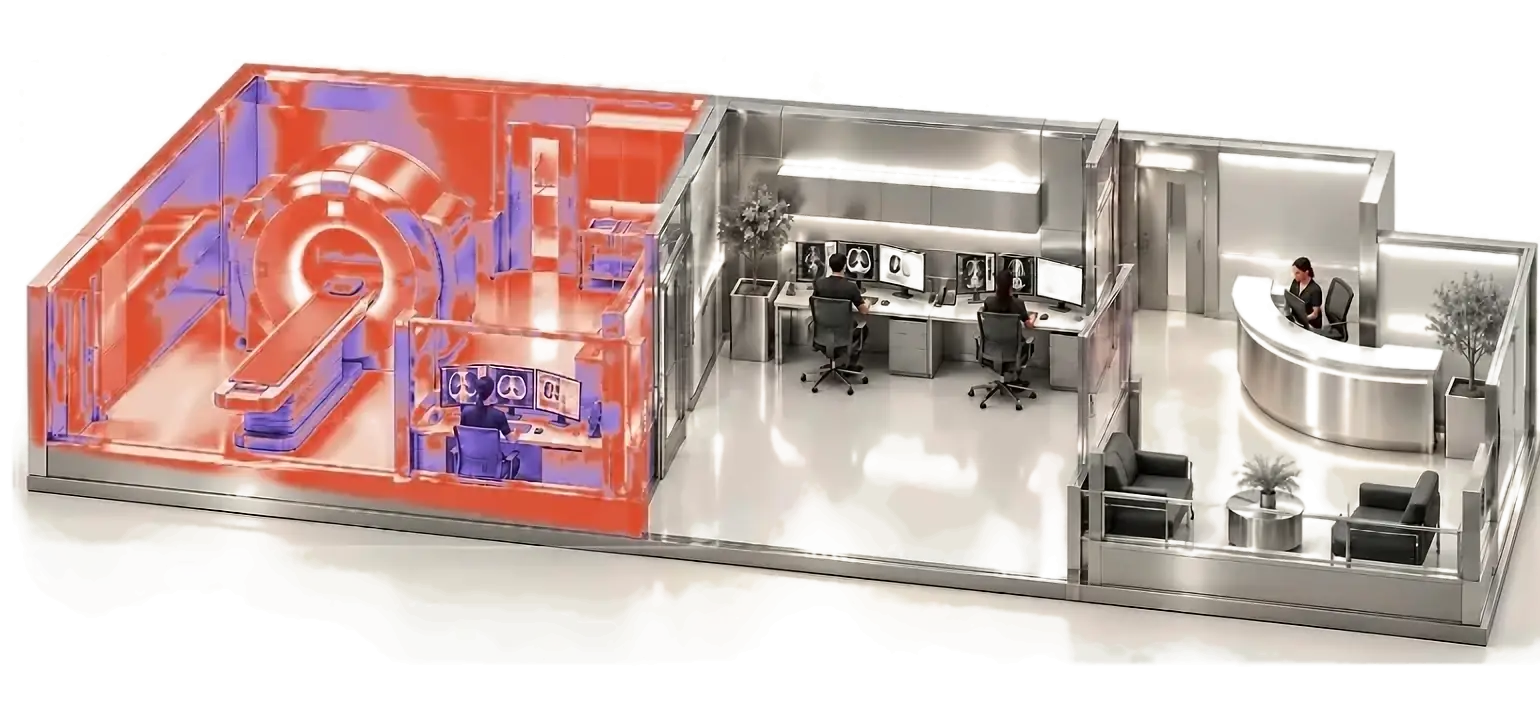
01 / 03Your voice. Your template. No typing.
You dictate as you speak. The report follows your template and uses your specialty's terminology.
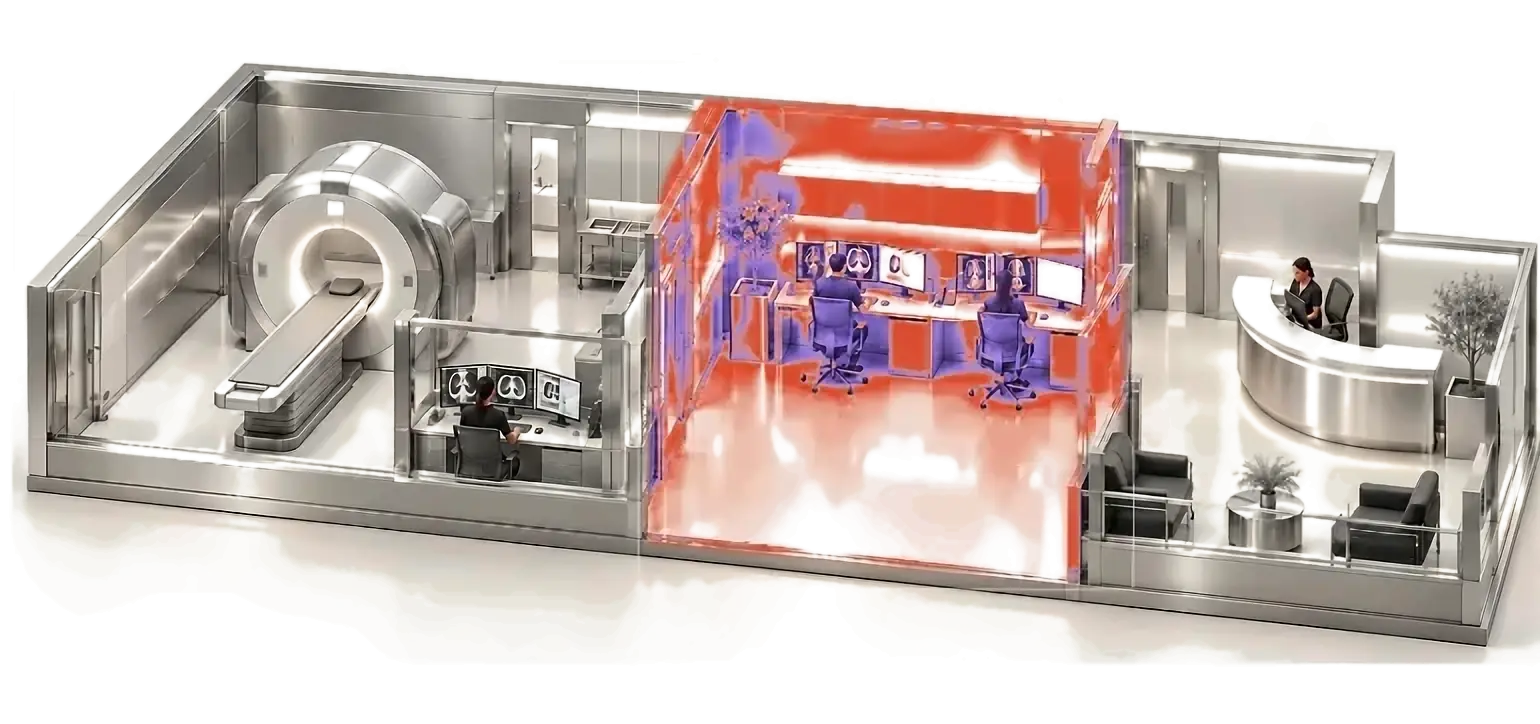
02 / 03Report signed. Patient served.
Critical finding flagged for immediate communication and the report ready for release as soon as the physician signs. The queue moves and turnaround time drops.
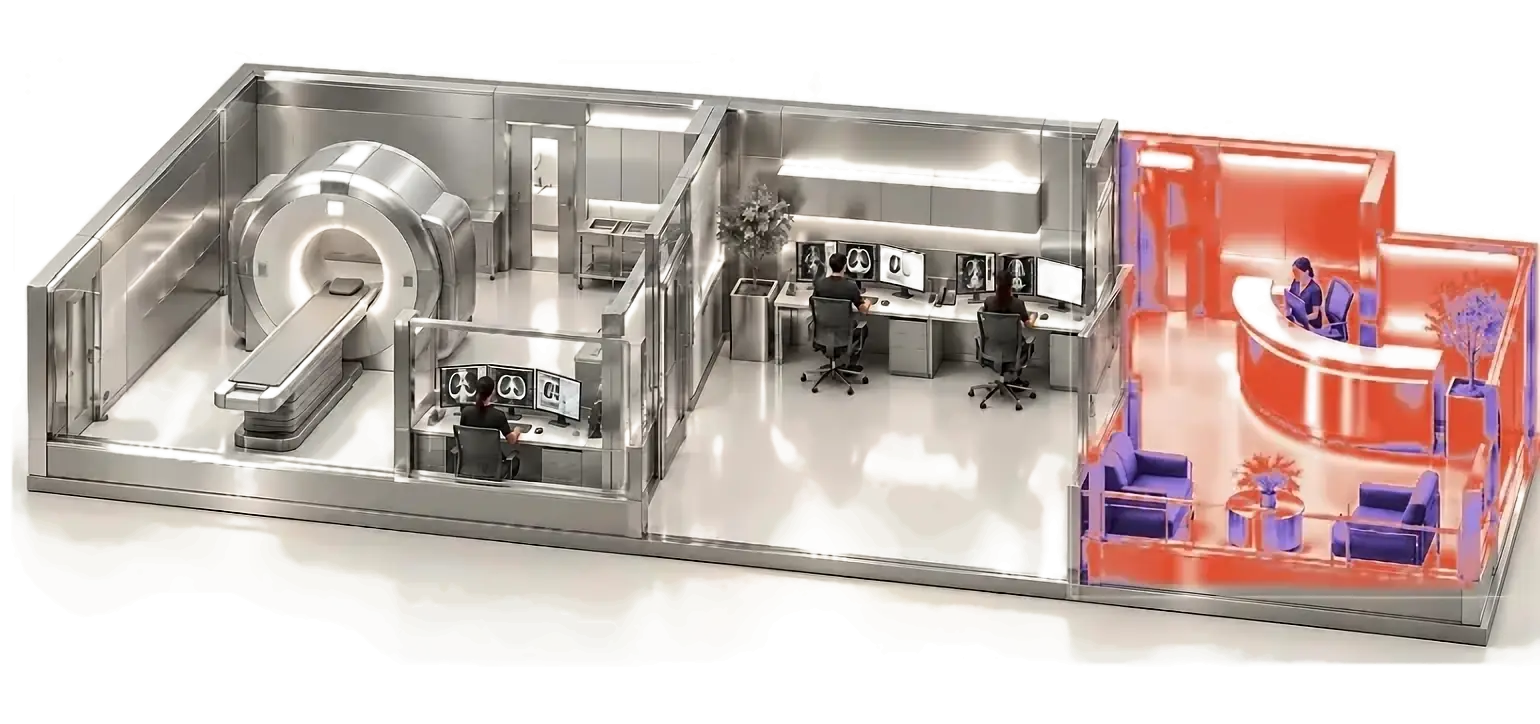
03 / 03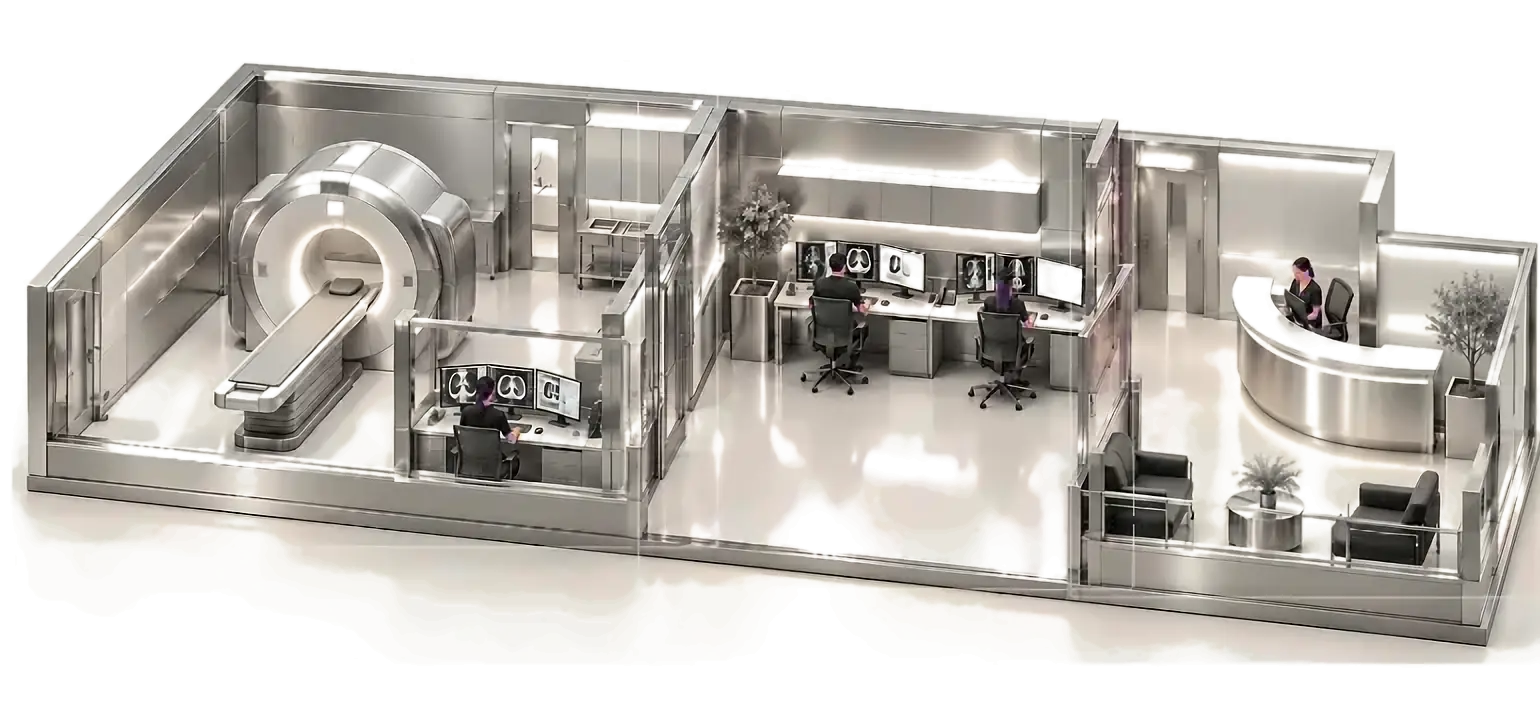
Laudos.AI RADAR · for institutions
The report is doneThe work isn't
RADAR flags reports that may need communication, peer review or follow-up. It also compares the report, billing and authorization to flag documentary claim-denial risk.
A critical finding needs more than a conclusion.
Find reports with findings from your critical-results list. Check whether communication is needed, and track contact and receipt as separate steps.
Intracranial hemorrhage
What the document saysAcute subdural hematoma.
In this example, no contact is recorded in the session yet. This does not prove that no communication occurred in another system.
A reason for review, not just a flag.
Compare technique, measurements, laterality, findings and conclusion. Locate possible inconsistencies and the passages that support referral for peer review.
Conflicting laterality
What the document saysKidney lesion, right side.
Kidney lesion, left side.
Check both statements before making a correction. Text analysis does not establish which side is correct.
The recommendation stays visible to the team.
Find recommendations for follow-up and further investigation in the report. Identify what needs review and follow-up, with the source passage available.
Follow-up recommended in the report
What the document saysSuggested: follow-up CT in 3 months.
The interval comes from this example document. The team assesses the recommendation in its clinical context.
Does the report support the billed procedure?
Compare the report, billing and authorization. Check differences in procedure, contrast and laterality before billing or during payer review.
Contrast: report versus billing
What the document saysExam performed without contrast (IV).
Chest CT with contrast (IV).
Documentary claim-denial risk. Check the administration record and reconcile the documents. No automatic approval or denial.
Who uses it
Professionals ending their shiftwith less friction
“I can report every exam within the shift itself. I no longer take any work home. And it also prevents rework.”
“I use Laudos.AI for my Doppler studies. The precision in structuring the findings is what stands out most.”
Plans and pricing
Try it on your next shiftDecide later
R$ 0
14 days or up to 30 reports. Use it on your real exams, with your own templates. Our team imports your templates at no cost. No card and no automatic charge.
Try 30 reports freeR$ 299/month
Up to 1,000 reports per month. Unlimited structured dictation in every specialty, RADS classifications with a visible source, custom templates and priority support on WhatsApp.
Try 30 reports freeCustom
For imaging centers, hospitals and teleradiology. Integration with your PACS and RIS, CRIT and RADAR modules (claim-denial audit and peer review), template governance and a dedicated SLA.
Book a demoResources
Guides to radiology reporting
Choose a guide for the step you want to improve: dictation, review or software selection. Each guide explains what to compare, how to test and the limitations of each feature.
Radiology reporting software
Report editors, speech recognition and AI report structuring handle different tasks. Compare the effort required to adapt your templates, review the text and submit reports in your official system. The guide covers cost, access and integration criteria for testing the software in your workflow.
Dictation for medical reports
Dictate terms, measurements and negations as you would during a shift. Then check what was transcribed, what went into the draft and what needed correcting. The guide distinguishes speech recognition from report structuring.
How to evaluate AI for medical reports
Compare the findings provided with every statement in the generated text. Record omissions, additions, laterality, measurements and structural changes. Refer to the review criteria and the limitations of the metrics before assessing time savings.
Questions and answers
Before youtry it
Questions about reporting, management and IT. If yours is not here, contact the team.
Talk to the teamNo. Laudos.AI supports reporting in radiology, nuclear medicine, cardiology and other specialties. You dictate the findings; the report follows your template. You review and sign.
Every result is an assistive draft. You check findings, measurements, laterality, classifications and conclusion. Interpretation, editing and signature remain the physician's, and every change is recorded.
14 days or up to 30 reports, whichever comes first. No card and no automatic charge. After that, the Pro plan costs R$ 299/month for up to 1,000 reports.
Integration depends on the systems and the scope. In the institutional demo, the team assesses your setup before defining the proposal.
Laudos.AI complies with CFM Resolution 2.454/2026 and the LGPD (Brazil's data protection law). The security documentation is ready for IT and DPO review.
More reports done on shift. More life outside it.
The diagnostic interpretation is yours. The formatting doesn't have to be. Start now with 30 free reports, no card required.